
Sandy Clean Waters
The City of Sandy is moving forward with a comprehensive approach for how we handle our wastewater. Interim fixes have put off this decision, but further delay is not an option under a federal consent decree, especially with the escalating impact of our system’s problems on local residents and businesses.
This work will come with a substantial cost to ratepayers, but the City's new groundwater discharge plan is significantly less expensive than previous options like discharging to Gresham or the Sandy River. And the cost of inaction would be more, as the City would accrue additional fines and the cost of construction is rising rapidly.
HOW WE GOT HERE
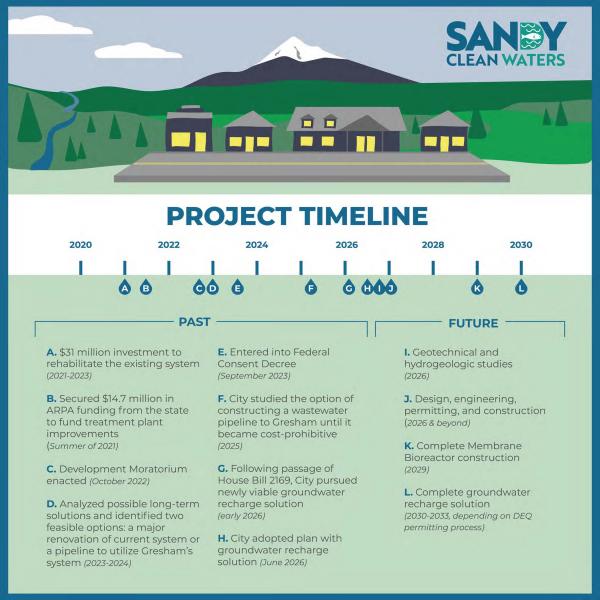
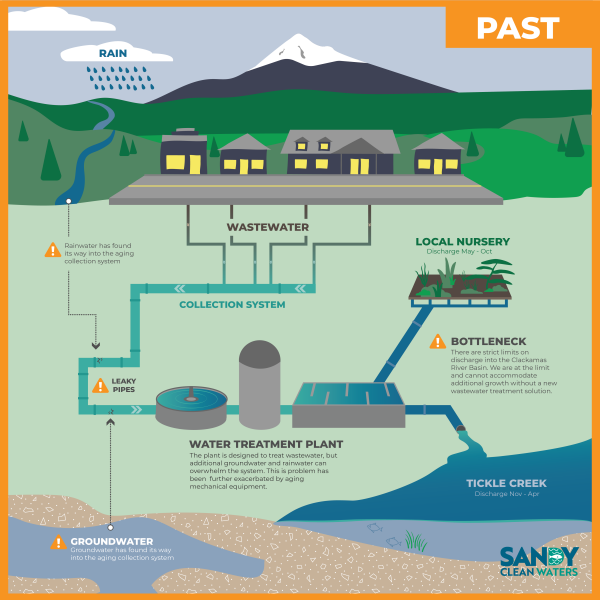
In the 1970s, the state capped how much wastewater can be discharged into the Clackamas River basin in order to preserve water quality. This means even though our community makes up a tiny portion of those that live in that basin, we have strict limits on how much treated wastewater we can put in it. Since then, as we have grown, the City has used a number of strategies to handle our increased wastewater. That includes upgrades to our wastewater treatment plant and an innovative partnership to provide recycled water to a local nursery. But these are limited solutions and about a decade ago the U.S. Environmental Protection Agency and Oregon Department of Environmental Quality began finding the City out of compliance with the federal Clean Water Act. Under the federal Consent Decree, we are required to implement a permanent solution and are limited in issuing new land use permits for housing and businesses until we do.
WHAT OPTIONS WERE CONSIDERED?
The City engaged in a multi-year effort to study all viable options for treating and discharging the City's wastewater.
During 2025, it appeared the most viable option would be to construct a pipeline to pump wastewater to the City of Gresham for treatment and discharge. However, further study showed the cost of this option to be unattainable.
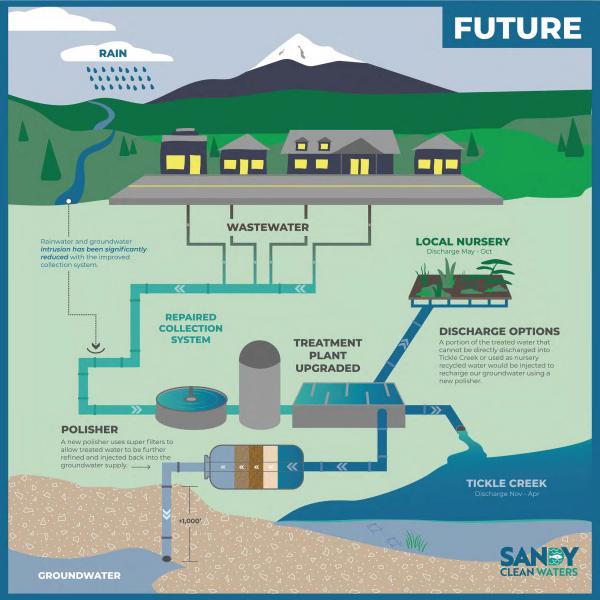
In late 2025, the City learned that new policy from the State of Oregon related to water reuse (specifically HB 2169) created new possibilities for discharge of treated wastewater. Under this new policy framework, the City adopted a plan to build infrastructure to treat wastewater to extremely high standards through either reverse osmosis or granular activated carbon, and then discharge the highly-treated effluent underground to recharge the groundwater in our area (as is done in communities throughout the western United States).
The groundwater recharge solution identified in the 2026 Wastewater Facility Plan Amendment is significantly less expensive than the either Sandy River discharge alternative (which is now the City's backup 'plan b' option) or the Gresham alternative. Groundwater recharge is also good for the local environment, boosting our area's water resiliency in a time of increasing drought.
WHAT WILL IT COST?
If the City is not able to secure outside funding, ratepayers will see significant increases on their bills. These increases could be 12% a year for the next eight years. The overall cost of these projects is approximately $150 million. In 2025-26 we secured $5 million from the Oregon Legislature and $1 million from the federal government to support these projects, which will help us reduce the cost to future ratepayers. In addition, the city will use fees (SDCs) to ensure new developments pay for themselves. We recognize that this will be hard for the community, particularly given other recent increases. Unfortunately, this is the only way to effectively address this challenge in the long term and provide a pathway to rate increase relief once we have made the transition.
WHAT'S NEXT?
Building out the needed infrastructure and transitioning to the new groundwater recharge solution will take several years. We will also continue to make improvements to our wastewater collection system during that time. The City is working to lessen the impact on ratepayers by securing state and federal funding, as well as evaluating when it may be financially advantageous to pay down loan balances with revenue from development fees. We are also working to educate the community about how to preserve our wastewater system and reduce the impact of what we all pour down the drain. During this time, the City is committed to having an open and transparent conversation with the community about why this is the path we’ve chosen and our progress along the way.
STAY UP TO DATE WITH SANDY CLEAN WATERS
The City will be providing regular updates to residents on the progress of this work. To stay up to date on the latest news and project milestones, sign up for project updates here. You can also provide comments or questions here.
Supporting Documents
 Wastewater Past (1 MB)